

Article Summary: This comprehensive guide provides a detailed overview of Laser Target Designators (LTDs), including technical specifications, operational principles, practical applications, and answers to common questions. The content is structured to facilitate expert-level understanding while remaining accessible for professionals seeking in-depth knowledge on LTD technology.
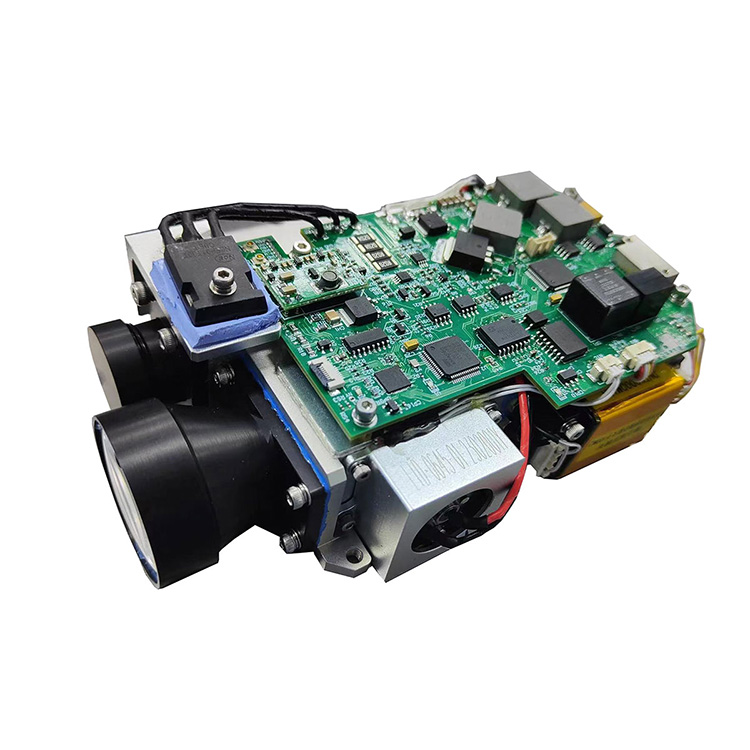
Laser Target Designators (LTDs) are advanced optical devices that allow precise identification and marking of targets for guided munitions or observational purposes. They emit a highly focused laser beam that “paints” the target, enabling laser-guided systems to track and engage with unparalleled accuracy. This article explores the technical parameters, operational advantages, applications, and frequently asked questions about Laser Target Designators.
The central purpose of this guide is to provide professionals in defense, surveillance, and tactical operations with a detailed understanding of how Laser Target Designators function and how they can be effectively deployed in modern operational scenarios.
The following table summarizes the typical technical parameters for a Laser Target Designator:
| Parameter | Description |
|---|---|
| Laser Type | Eye-safe infrared laser, 1064 nm wavelength, pulsed and continuous modes available |
| Output Power | Up to 500 mW peak power for long-range designation |
| Range | Daylight operation: 10 km; Night operation: 15 km with NVG support |
| Beam Divergence | 0.3 mrad adjustable for different target sizes |
| Mounting Options | Tripod, handheld, vehicle, or aircraft integration |
| Power Supply | Rechargeable Li-ion battery or external power source, 8-12 hours operational time |
| Weight | Approximately 4.5 kg (portable configuration) |
| Environmental Resistance | IP67 waterproof, -20°C to +55°C operating temperature, shock-resistant |
LTDs are primarily used to mark targets for precision-guided munitions, such as laser-guided bombs or missiles. They allow operators to designate moving or stationary targets accurately under various environmental conditions. Tactical use includes urban warfare, long-range engagement, and night operations with infrared capabilities.
Beyond weapon guidance, LTDs support reconnaissance missions by enabling precise location tagging of objects or areas of interest. They provide real-time positional information for UAVs, ground observation teams, or other tracking systems, enhancing situational awareness and operational coordination.
LTDs can be mounted on multiple platforms, including tripods, vehicles, and aircraft. Integration involves aligning the laser with onboard sensors and ensuring compatibility with targeting software. The designator can synchronize with GPS, thermal imaging, and night-vision systems for seamless targeting and reconnaissance operations.
The effective range varies depending on the laser’s power output and environmental conditions. Standard LTDs operate effectively up to 10 km in daylight and 15 km at night with compatible night vision devices. Atmospheric conditions such as fog, rain, or dust may reduce range.
Yes, LTDs use eye-safe infrared wavelengths for most operational models, reducing the risk of injury. However, operators must follow strict safety protocols to avoid direct eye exposure. Specialized training ensures safe deployment in complex environments.
Precision depends on laser beam divergence, stabilization, and alignment with guidance systems. Modern LTDs offer sub-meter accuracy at long ranges, sufficient for coordinating with guided munitions or observation platforms.
Operational time depends on the power supply. Typical portable LTDs with rechargeable Li-ion batteries can function continuously for 8-12 hours. Vehicle-mounted or externally powered systems can operate for extended durations without interruption.
Maintenance includes regular cleaning of optics, inspection of alignment, battery management, and software calibration. Proper handling ensures long-term reliability and consistent performance under operational stress.
Laser Target Designators are essential tools for precision engagement, reconnaissance, and situational awareness in modern operations. Their versatility, accuracy, and integration capabilities make them a critical asset across defense and security sectors. The expertise of Jioptik in delivering reliable, high-performance Laser Target Designators ensures operational efficiency and superior targeting capabilities.
For detailed inquiries, product consultation, or technical support, please contact us to receive professional guidance and tailored solutions for your operational requirements.
For more information on our products, please contact Jioptik.
