

The rapid development of intelligent equipment and precision navigation technologies is creating new demands for highly reliable sensing solutions. In applications where accurate orientation, stable positioning, and continuous operation are required, advanced optical sensing technologies are becoming increasingly important. A Fiber Optic Gyroscope provides a valuable approach for modern navigation systems by using optical principles to measure angular movement and support precise attitude information.
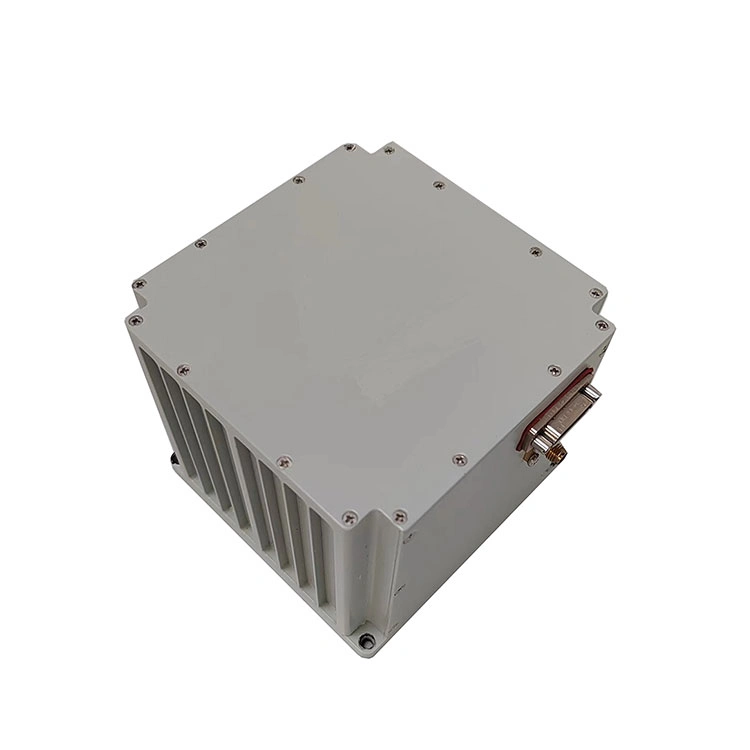
Modern navigation systems are widely used in aerospace, marine equipment, unmanned platforms, industrial systems, and vehicle-mounted solutions. These applications often operate in complex environments where traditional navigation methods may face limitations caused by signal interruption, electromagnetic interference, or changing operating conditions.
Optical sensing technologies have become an important part of advanced navigation development because they can provide stable performance without relying on external signals. By combining optical components, electronic processing units, and intelligent algorithms, modern navigation equipment can achieve higher levels of reliability and adaptability.
The increasing use of unmanned aircraft, autonomous vehicles, and intelligent platforms has further accelerated the demand for compact and dependable navigation solutions. These systems require accurate information about movement, direction, and position to support efficient operation in different environments.
The development of professional navigation equipment is influenced by several technical requirements:
These requirements encourage manufacturers to focus on integrated solutions rather than individual components. A complete navigation system needs coordinated design across sensing, processing, communication, and mechanical structures.
Optical navigation technology has developed significantly due to improvements in optical components, manufacturing processes, and signal processing methods. Compared with traditional mechanical sensing approaches, optical-based solutions can offer advantages in terms of durability, operational stability, and system integration.
One important feature of optical navigation is its ability to provide continuous measurement information. This makes it suitable for applications where reliable orientation data is required over long operating periods. Whether used in aerospace equipment, marine systems, or unmanned platforms, stable sensing performance is essential for maintaining overall system efficiency.
In professional navigation applications, engineers must consider multiple factors, including system architecture, environmental conditions, installation requirements, and communication compatibility. The sensing unit needs to work effectively as part of a complete platform rather than operating independently.
| Technology Area | Design Focus | Application Value |
|---|---|---|
| Optical Sensing | Accurate movement detection and stable measurement | Reliable navigation information |
| Electronic Processing | Efficient signal analysis and data management | Improved system response |
| Mechanical Design | Compact structure and operational durability | Flexible equipment integration |
| System Communication | Compatibility with different platforms | Smoother equipment coordination |
The performance of a navigation system depends on the cooperation of multiple components. Optical sensors, processing circuits, software algorithms, and structural designs must work together to achieve consistent results.
In aerospace and unmanned applications, navigation equipment often needs to operate under vibration, temperature changes, and complex movement conditions. Therefore, manufacturers must carefully evaluate component reliability and system-level performance during product development.
Advanced optical components help improve navigation equipment by providing precise sensing capabilities while maintaining integration flexibility. This allows engineers to develop solutions for different platforms, from compact unmanned devices to larger industrial systems.
High-performance navigation technologies are widely applied in various industries:
Each application has different technical requirements, which means manufacturers need flexible development capabilities. Customized design, system integration experience, and production expertise are becoming increasingly important in the navigation industry.
Developing advanced navigation products requires not only technical knowledge but also strong manufacturing capabilities. Optical systems involve precise components, complex assembly processes, and strict quality management throughout production.
Professional manufacturers usually establish complete development processes covering research, engineering design, testing, and manufacturing. This approach helps maintain consistency between prototype development and large-scale production.
Quality control is particularly important for optical navigation equipment because small variations in components or assembly conditions may influence system performance. Careful manufacturing management helps ensure that products can meet the requirements of demanding applications.
Successful navigation equipment development often depends on several technical capabilities:
These capabilities allow companies to create products that are suitable for professional applications. From initial concept development to final production, every stage requires close coordination between different technical departments.
The future development of navigation systems is closely connected with the growth of intelligent equipment. As unmanned systems, automation technologies, and advanced industrial platforms continue to expand, the demand for accurate and reliable sensing solutions will continue to increase.
Future navigation equipment is expected to become more integrated, combining sensing, computing, communication, and control functions within compact architectures. This trend will require manufacturers to improve both product performance and system compatibility.
Another important direction is the combination of navigation technologies with other optoelectronic systems. When navigation functions are integrated with imaging equipment, ranging systems, and intelligent control platforms, they can provide more complete information for advanced applications.
The optoelectronic industry is gradually shifting from individual component development toward complete system solutions. Customers increasingly require products that can be easily integrated into existing platforms while maintaining reliable performance.
This trend creates opportunities for companies with strong research capabilities, manufacturing resources, and experience in optical system development. By combining different technologies, manufacturers can support more complex application requirements and accelerate product innovation.
Different industries often require different navigation configurations. Aerospace platforms, unmanned equipment, marine systems, and industrial devices may have unique requirements related to size, communication, installation, and operating environments.
For this reason, customization has become an important part of advanced navigation product development. Professional suppliers need to understand application scenarios and provide technical solutions that match specific system requirements.
OEM and ODM cooperation models allow manufacturers to work closely with partners during product development. Through customized engineering support, companies can improve integration efficiency and develop solutions that better match practical applications.
A supplier with both research and production capabilities can provide support throughout the development process, including technical consultation, product design, manufacturing, and system integration assistance.
Shenzhen Jioptik Technology Co., Ltd. specializes in the design, development, production, and sales of laser and fibre optic gyroscopes, inertial navigation systems, laser rangefinder modules, laser illuminators, optoelectronic pods, and other advanced optical products.
The company has established professional product lines covering optical navigation technologies, optoelectronic modules, and UAV-based optoelectronic systems. With strong research and development capabilities, Jioptik focuses on providing reliable solutions for security, thermal imaging, unmanned aircraft, unmanned vehicles, aviation, marine equipment, and vehicle-mounted positioning applications.
Through continuous investment in optical technology research and manufacturing development, Jioptik supports OEM and ODM cooperation for customers requiring specialized optoelectronic solutions. The company combines engineering expertise, production capability, and system integration experience to deliver products designed for demanding professional environments.
As the demand for intelligent navigation and integrated optical systems continues to grow, Shenzhen Jioptik Technology Co., Ltd. remains committed to developing advanced technologies and providing professional support for global partners seeking reliable optical sensing and navigation solutions.
For more information on our products, please contact Jioptik.
