

A 905nm LRF Module is a core component in contemporary laser ranging and distance measurement systems, widely adopted in industrial automation, intelligent transportation, outdoor surveying, and electro-optical integration. This article provides a comprehensive technical analysis of the 905nm LRF Module, explaining how it works, where it is applied, and how its specifications align with real-world system requirements. Detailed parameters, structured explanations, and common technical questions are included to support engineering evaluation and procurement decisions. The discussion concludes with practical integration insights and a brand reference to JioptiK for further technical collaboration.
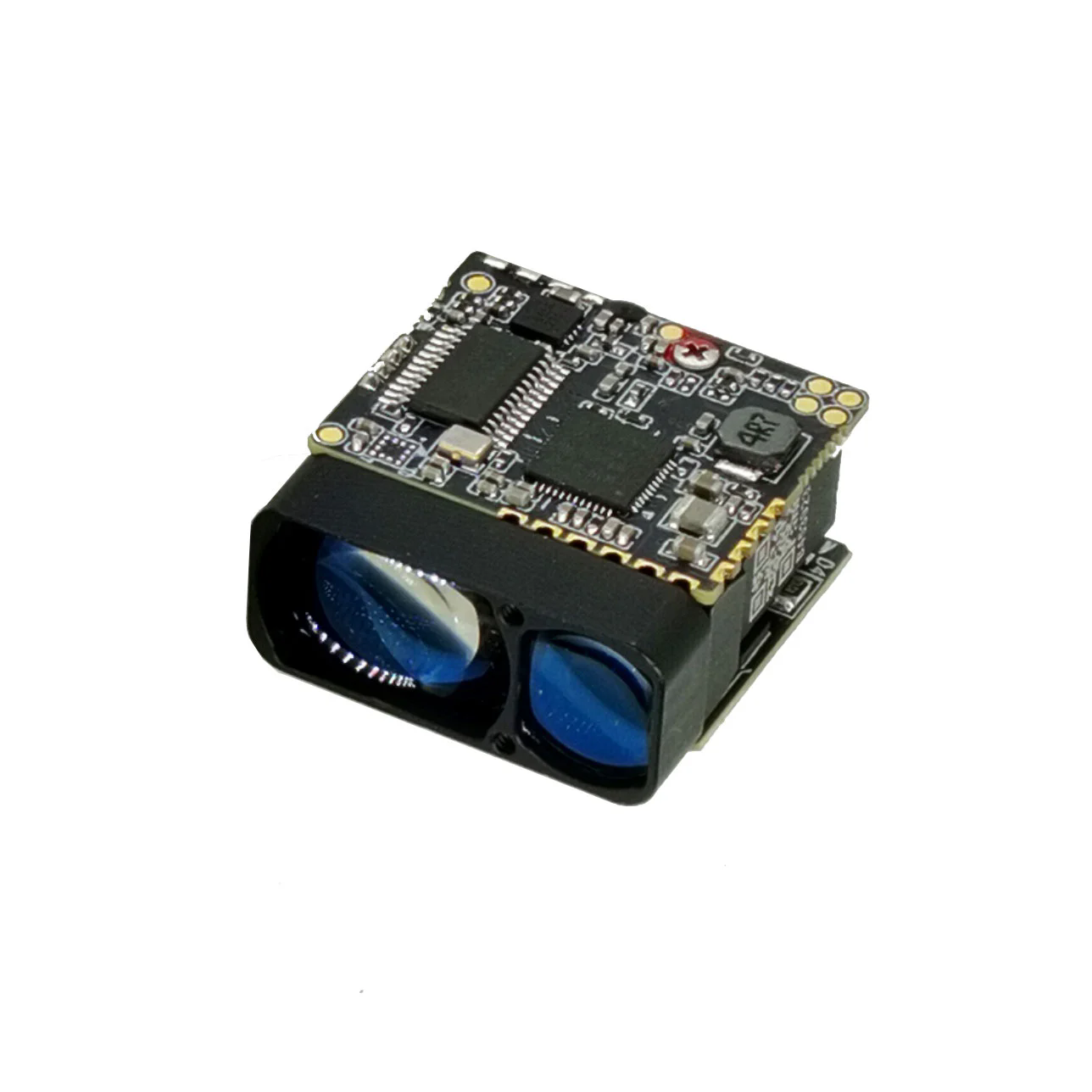
A 905nm LRF Module operates based on the Time-of-Flight (ToF) principle, where a laser pulse emitted at a wavelength of 905 nanometers travels toward a target, reflects off its surface, and returns to the receiver. The module calculates distance by precisely measuring the elapsed time between emission and reception.
The 905nm wavelength sits within the near-infrared spectrum, balancing atmospheric transmission efficiency and component availability. This wavelength is widely used due to its compatibility with silicon-based detectors and established semiconductor laser technology.
A typical 905nm LRF Module consists of a laser emitter, receiving optics, photodetector, timing circuit, signal processing unit, and communication interface. Together, these components enable accurate ranging under varying environmental conditions such as fog, dust, and changing reflectivity.
In practical systems, the module functions as a self-contained ranging unit, delivering real-time distance data to host controllers for further computation, decision-making, or visualization.
Technical evaluation of a 905nm LRF Module requires a clear understanding of its core performance parameters. These specifications determine suitability for specific applications, whether short-range precision measurement or long-range outdoor detection.
Below is a consolidated overview of representative technical parameters for an industrial-grade 905nm LRF Module:
| Parameter | Typical Specification |
|---|---|
| Laser Wavelength | 905 nm ± 5 nm |
| Measurement Range | 20 m to 3000 m (depending on target reflectivity) |
| Measurement Accuracy | ±0.5 m to ±1 m |
| Range Resolution | 0.1 m |
| Pulse Repetition Frequency | 1 Hz – 20 Hz |
| Beam Divergence | < 1 mrad |
| Operating Voltage | 5 V / 12 V DC |
| Communication Interface | UART / RS232 / RS422 |
| Operating Temperature | -40°C to +60°C |
These parameters directly influence system-level performance. For example, beam divergence impacts spatial resolution at long distances, while pulse repetition frequency determines real-time responsiveness in dynamic scenarios.
When evaluating modules, engineers often prioritize stability across temperature ranges, consistency of output data, and compatibility with existing electro-optical subsystems.
Integration of a 905nm LRF Module varies by industry but generally follows standardized opto-electronic design practices. The module is typically embedded into a host platform that provides power management, data processing, and mechanical alignment.
Common application domains include:
In intelligent transportation systems, 905nm LRF Modules are used for obstacle detection, speed enforcement, and vehicle positioning. Their fast response and long-range capability support reliable outdoor operation.
In industrial automation, the module enables non-contact distance measurement for cranes, robotics, and material handling systems, reducing mechanical wear and improving safety.
In electro-optical payloads, such as surveillance or targeting systems, the module synchronizes with imaging sensors to provide precise range data aligned with visual output.
System designers must consider optical alignment, electromagnetic compatibility, and thermal dissipation during integration. Proper calibration ensures that measured distance aligns with optical axis and system reference frames.
Q: How does target reflectivity affect ranging performance?
A: Target reflectivity directly influences the strength of the returned signal. High-reflectivity surfaces enable longer detection distances, while low-reflectivity or diffuse targets reduce effective range and may require signal averaging.
Q: How does a 905nm LRF Module perform in adverse weather?
A: While near-infrared wavelengths experience some attenuation in fog, rain, or dust, 905nm modules maintain reliable performance through optimized pulse energy and signal processing algorithms.
Q: How is eye safety managed in 905nm laser ranging?
A: Eye safety is controlled through pulse duration, repetition rate, and beam divergence, ensuring compliance with international laser safety standards while maintaining effective ranging capability.
Future development of 905nm LRF Modules is driven by demand for compactness, higher integration, and improved signal intelligence. Advances in semiconductor lasers and detectors continue to enhance performance while reducing power consumption.
Emerging trends include tighter integration with AI-enabled processing units, allowing real-time filtering, object classification, and adaptive ranging strategies. Multi-sensor fusion, combining LRF data with vision and inertial sensors, is becoming standard in advanced platforms.
Despite the emergence of alternative wavelengths, the 905nm LRF Module remains a dominant choice due to its mature supply chain, regulatory familiarity, and proven field reliability.
Manufacturers such as JioptiK continue to refine 905nm LRF Module designs to meet evolving industry standards, offering scalable solutions for both commercial and specialized applications.
For system integrators and project developers seeking detailed specifications, customization options, or technical consultation regarding 905nm LRF Modules, direct communication with JioptiK is recommended. Contact us to explore how tailored ranging solutions can be aligned with specific operational requirements.
For more information on our products, please contact Jioptik.
