

In the demanding world of precise navigation and stabilization, the technology you rely on can mean the difference between success and failure. For decades, engineers and system integrators have sought solutions that offer unparalleled accuracy without the mechanical frailties of traditional spinning-wheel gyros. The answer lies in a groundbreaking technology that has become the industry standard for high-performance applications: the Fiber Optic Gyroscope (FOG).
But what truly sets a high-performance FOG apart? It's not just the principle of operation—the Sagnac effect—but the meticulous engineering, superior components, and rigorous manufacturing that translate theory into exceptional real-world performance. At Shenzhen Jioptik Technology Co., Ltd., we have dedicated ourselves to perfecting this technology, providing our clients with FOGs that deliver reliability and precision where it matters most.
Let's delve into the core of what makes our FOGs the intelligent choice for your advanced projects.
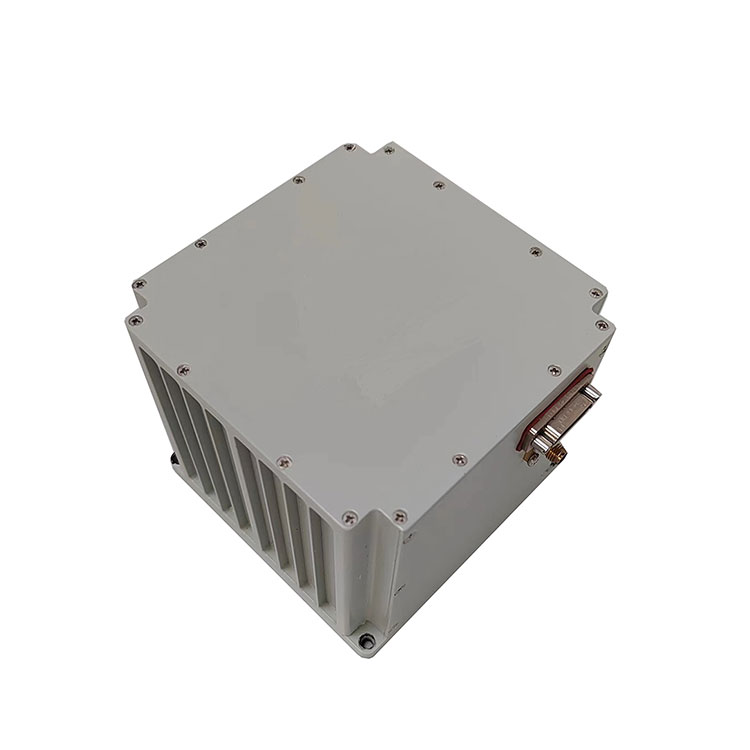
Unmatched Performance: Dissecting the Core Parameters of Our FOGs
Understanding a FOG's specifications is key to selecting the right solution. It's not just about one number; it's about a symphony of parameters working in harmony. Below, we break down the critical specs that define our product line.
Key Performance Indicators (KPIs) at a Glance:
Bias Stability: The cornerstone of accuracy, defining how consistently the gyro measures a zero rotation rate.
Angle Random Walk (ARW): A measure of the inherent noise that limits the gyro's sensitivity and short-term accuracy.
Scale Factor Nonlinearity: Indicates how precisely the output scale factor matches the input rotation rate across its full dynamic range.
Shock & Vibration Tolerance: The ability to maintain performance under harsh mechanical environments.
Start-Up Time: The time required for the system to be fully operational and stable after power-on.
To give you a clearer picture, here is a simplified overview of our standard FOG product series:
| Product Series | Bias Stability (°/h) | Angle Random Walk (°/√h) | Scale Factor Nonlinearity (ppm) | Operating Range (°/s) | Key Application Focus |
|---|---|---|---|---|---|
| J-FOG-100 | 1.0 - 5.0 | 0.05 - 0.1 | < 200 | ±500 | UAV Navigation, Platform Stabilization |
| J-FOG-200 | 0.1 - 1.0 | 0.01 - 0.05 | < 100 | ±400 | Surveying, Robotics, Autonomous Vehicles |
| J-FOG-500 | 0.01 - 0.1 | 0.002 - 0.01 | < 50 | ±300 | Strategic-grade Navigation, Aerospace |
| J-FOG-1000 | < 0.01 | < 0.002 | < 25 | ±200 | High-Precision Targeting, Satellite Payloads |
Why These Parameters Matter for Your Application:
For UAVs and Robotics: A low Angle Random Walk (ARW) is critical. It ensures your vehicle or robot doesn't "drift" off course over time, enabling precise dead reckoning and smooth, controlled movements even when GPS signals are temporarily lost.
For Aerospace and Defense: Exceptional Bias Stability is non-negotiable. It guarantees that the inertial navigation system's position error grows very slowly, a vital factor for long-duration missions where external aids like GPS may be unavailable or compromised.
For High-Dynamic Environments: Superior Shock and Vibration Tolerance ensures that the gyro's output isn't corrupted by external forces. This is paramount for applications on moving vehicles, industrial machinery, or equipment subject to sudden impacts.
Our commitment at Shenzhen Jioptik Technology Co., Ltd. is to not only meet these specifications on a data sheet but to ensure they are consistently delivered in every unit that leaves our facility. We use premium, aerospace-grade fiber optic coils and integrated optics to minimize noise and maximize long-term stability.
Fiber Optic Gyroscope FAQ: Your Top Questions, Expertly Answered
Navigating the complexities of FOG technology is part of our job. We've compiled some of the most frequent questions we receive from professionals like you.
FAQ 1: How does a Fiber Optic Gyroscope fundamentally differ from a traditional MEMS gyroscope?
Answer: The difference is foundational. A MEMS (Micro-Electro-Mechanical System) gyroscope relies on tiny, vibrating mechanical structures whose motion is altered by the Coriolis effect when rotated. A Fiber Optic Gyroscope, in contrast, has no moving parts. It uses the interference of light waves traveling in opposite directions within a long coil of optical fiber to detect rotation via the Sagnac effect. This fundamental distinction gives FOGs significant advantages in terms of reliability, shock survival, longevity, and overall performance stability, especially over temperature variations and throughout its operational lifespan. While MEMS are excellent for cost-sensitive, lower-accuracy applications, FOGs are the definitive choice for mission-critical, high-precision systems.
FAQ 2: What is the typical operational lifespan of a FOG, and what are the main factors that affect it?
Answer: The operational lifespan of a high-quality Fiber Optic Gyroscope is exceptionally long, typically exceeding 100,000 hours (over 11 years). The primary reason for this remarkable longevity is the solid-state design. With no mechanical wear-out mechanisms like bearings or motors, the system is inherently robust. The main factors that can influence lifespan are related to the peripheral electronics and the integrity of the optical components. At Shenzhen Jioptik, we use industrial and military-grade components, subject our units to extensive burn-in testing, and design for minimal thermal stress, ensuring that our FOGs provide decades of dependable service in the most challenging conditions.
FAQ 3: Can your FOGs be customized to fit the specific size, weight, and power (SWaP) requirements of our project?
Answer: Absolutely. We recognize that off-the-shelf solutions don't always fit unique project constraints. Customization is a core part of our service at Shenzhen Jioptik Technology. Our engineering team excels at optimizing our FOG designs to meet stringent SWaP requirements without compromising core performance. Whether you need a more compact form factor, a specific connector type, a reduced power consumption mode, or a unique performance specification tailored for a particular environment, we have the expertise to collaborate with you and develop a solution that integrates seamlessly into your system.
Why Partner with Shenzhen Jioptik Technology for Your FOG Needs?
Choosing a Fiber Optic Gyroscope is an investment in the reliability and accuracy of your entire system. It's a decision that should be made with a partner who understands the stakes. Our two decades of deep industry experience are channeled into every component we source, every assembly line process we refine, and every unit we test.
We don't just sell gyroscopes; we provide navigation and stabilization confidence. Our clients in the aerospace, defense, robotics, and surveying industries trust us because we deliver on our promises. Our FOGs are engineered for those who cannot afford to compromise.
Are you ready to integrate a level of precision that sets your project apart? Let's discuss how our Fiber Optic Gyroscope solutions can be the cornerstone of your next breakthrough.
Contact us today at Shenzhen Jioptik Technology Co., Ltd. to request a detailed datasheet or to schedule a consultation with our technical experts. We are here to help you navigate the future, with precision.
For more information on our products, please contact Jioptik.
