
Laser gyroscopes have become a core component in high-accuracy navigation, attitude control, and positioning systems across aerospace, defense, robotics, marine engineering, and autonomous vehicles. Their ability to measure rotation with exceptional stability—without relying on moving mechanical parts—makes them essential for environments where precision, reliability, and long-term durability are critical.
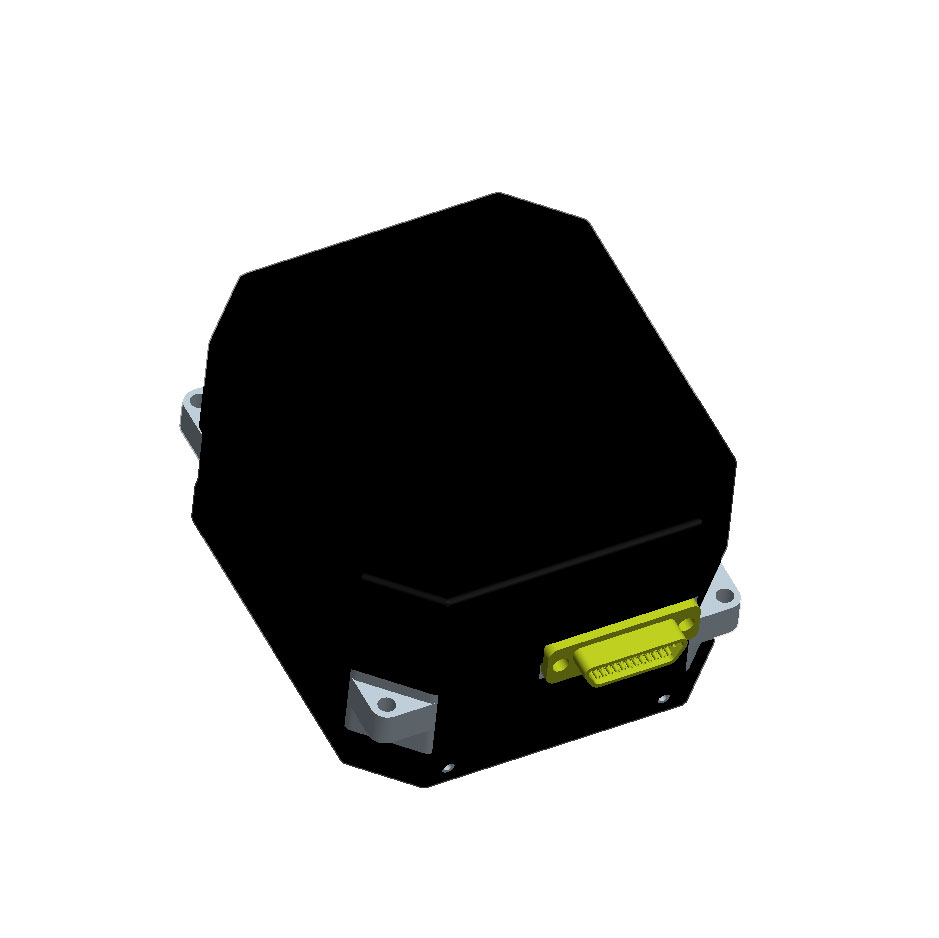
A laser gyroscope operates based on the Sagnac effect, a physical principle where two laser beams travel in opposite directions within a closed optical cavity. When the system rotates, the path length difference between the beams changes, resulting in a measurable frequency shift. This frequency shift directly corresponds to the angular velocity.
The absence of mechanical moving parts significantly reduces wear, drift, and maintenance requirements, while the stabilized optical cavity ensures long-term performance even under temperature fluctuations or vibration-heavy operating environments. By maintaining optical coherence and leveraging precision-engineered laser components, laser gyroscopes produce highly stable outputs suitable for mission-critical systems.
The following table summarizes typical specifications for a high-performance laser gyroscope used in aerospace and industrial applications:
| Parameter | Specification |
|---|---|
| Laser Type | He-Ne or solid-state laser |
| Measurement Axis | Single-axis or multi-axis |
| Rotation Sensitivity | Up to 0.0001°/h |
| Bias Stability | < 0.001°/h |
| Scale Factor Non-Linearity | < 10 ppm |
| Random Walk | < 0.001°/√h |
| Output Type | Digital or analog signal |
| Operating Temperature Range | -40°C to +70°C |
| Shock Resistance | Up to 1000 g |
| Vibration Resistance | Up to 20 g RMS |
| Lifetime | Up to 50,000+ hours |
These parameters reflect how laser gyroscopes outperform mechanical and MEMS gyroscopes when applications require uncompromising precision.
Advancements in laser cavity stability, optical component manufacturing, and digital signal processing have greatly expanded the use of laser gyroscopes. They excel in systems that require:
Laser gyroscopes deliver extremely low drift, allowing platforms to maintain accurate orientation without reliance on external references like GPS.
The rugged optical cavity and sealed housing provide immunity against vibration, temperature changes, and shock, enabling reliable operation in aircraft, spacecraft, naval vessels, and military vehicles.
Laser gyroscopes are often integrated into inertial navigation systems (INS) to complement accelerometers, providing full 6-DOF motion tracking essential for:
Autonomous aircraft control
Deep-sea navigation
Satellite stabilization
Military targeting systems
Industrial robotics
Since no mechanical rotor is used, laser gyroscopes require fewer calibration cycles and offer longer service life.
Stable laser sources, combined with digital processing, ensure clean output signals even under complex or noisy operating conditions.
The demand for ultra-reliable navigation is increasing across industries. Several trends are expected to influence the future of laser gyroscope design and deployment:
As drones, unmanned ground vehicles, and micro-satellites expand, smaller yet high-performance gyroscopes will be essential. Compact optical circuits and integrated photonics will play a major role.
Development is trending toward gyro systems capable of compensating for extreme temperature changes, radiation exposure, and vibration—making them suitable for deep space missions.
Next-generation gyroscopes will feature advanced DSP algorithms, allowing more efficient error compensation, real-time diagnostics, and predictive maintenance capabilities.
Laser gyroscopes will increasingly be paired with:
GNSS
Star trackers
Vision-based navigation
Radar sensors
Such hybrid systems will maintain accuracy even when one or more external reference signals become unavailable.
New optical materials and laser sources are improving energy efficiency, enabling longer operational life in battery-powered systems.
Choosing the appropriate gyroscope requires evaluating application-specific performance needs. The following factors have the greatest impact on selection:
High-end aerospace applications demand ultra-low bias drift and exceptional scale-factor linearity.
Systems operating in vibration-intense environments—such as military vehicles or drilling platforms—benefit from robust optical designs and vibration-compensation mechanisms.
Digital output gyroscopes are increasingly preferred for direct integration into modern navigation computers.
Systems requiring long operational life or limited access for maintenance benefit significantly from the non-mechanical design of laser gyroscopes.
While laser gyroscopes are more expensive than MEMS devices, they deliver performance levels necessary for mission-critical operations.
A1: Laser gyroscopes rely on the Sagnac effect, which inherently produces stable rotational measurements. With no moving mechanical parts and a precisely engineered optical cavity, the device experiences minimal drift. Advanced digital signal processing further refines accuracy by compensating for temperature variations, component aging, and noise. These features allow long-duration missions, such as satellite operations or deep-sea navigation, to maintain accurate orientation without continuous recalibration.
A2: MEMS gyroscopes are suitable for consumer and light-industrial uses but struggle with drift, bias instability, and environmental susceptibility. Laser gyroscopes, on the other hand, offer significantly higher precision, lower noise, and better stability across variable temperatures and vibration levels. This makes them the preferred solution for aerospace, defense, and high-precision industrial systems where reliability and accuracy cannot be compromised.
Laser gyroscopes continue to redefine the standards of accuracy, reliability, and performance across the global navigation and control industries. Their capability to deliver precise rotational measurements under extreme conditions positions them as a vital component in applications ranging from aerospace and defense to autonomous systems and scientific exploration. As advancements in optical engineering and digital processing accelerate, the technology is expected to become even more compact, robust, and integrated into next-generation navigation systems.
For organizations seeking high-performance laser gyroscopes with tailored specifications, JIOPTIK provides advanced solutions engineered for demanding environments and long-term reliability. The products are designed to deliver exceptional stability and seamless integration into modern navigation systems.
For further technical details or custom inquiries, please contact us to explore how JIOPTIK can support your application needs.
For more information on our products, please contact Jioptik.
