

Long-distance, high-precision optical ranging has become a core technical support for modern reconnaissance, mapping, security monitoring and intelligent equipment. 1064nm LRF Module with stable energy, strong fog penetration and compact structure provides reliable data support for complex scenarios, and its high-energy-density laser sources, low-power consumption design and miniaturized integration effectively extend detection range while ensuring accuracy and stability. This article focuses on core technical characteristics, product classification, performance comparison, typical applications, selection standards, quality control and supplier advantages, helping engineers, purchasers and integrators to build stable and efficient ranging systems.
In modern long‑distance measurement and target detection fields, high stability and strong environmental adaptability are critical requirements for ranging equipment. 1064nm LRF Module has become the preferred core component in the field of long‑distance ranging by virtue of excellent fog penetration, stable energy output, compact structure and long detection range.
Compared with visible light and other near‑infrared bands, 1064nm wavelength has lower atmospheric attenuation and stronger ability to penetrate smoke and fog, which can maintain effective detection under harsh weather conditions. The all‑solid‑state YAG laser design ensures high energy density and low power consumption, enabling long‑time stable operation in portable and vehicle‑mounted scenarios.
Modular integration allows these ranging units to be easily embedded in handheld devices, vehicle platforms, airborne systems and shipboard equipment, providing accurate distance data for reconnaissance, mapping, monitoring and security applications. With the rapid development of intelligent equipment and optoelectronic systems, high‑performance laser ranging modules are gradually becoming standard core components in professional fields.
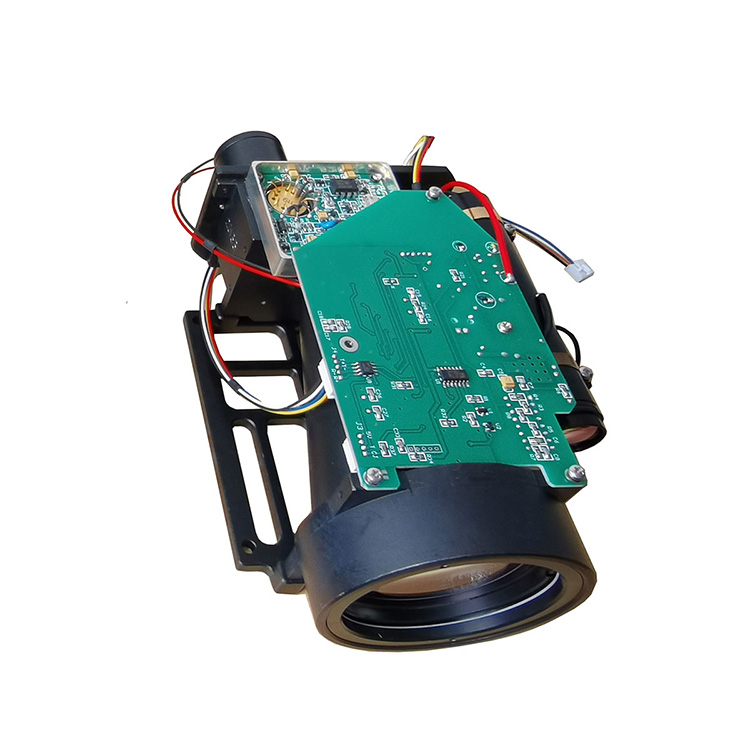
The working principle is based on time‑of‑flight (TOF) technology: the laser emits a short pulse, the echo signal is received after being reflected by the target, and the distance is calculated by measuring the time difference between transmission and reception. The 1064nm YAG laser is used as the emission source, with high single pulse energy and good beam quality, ensuring long‑distance detection capability.
Modular optical path design, integrated transmitting and receiving system, built‑in drive circuit and signal processing unit. The whole machine is compact, lightweight and highly integrated, which can meet the requirements of handheld, vehicle‑mounted, airborne and ship‑mounted integration. The sealed structure ensures stability under vibration, humidity and temperature changes.
Professional manufacturers provide a complete range of products to meet different ranging distance requirements, with unified accuracy and reliability indicators, facilitating customers to choose appropriate configurations according to application scenarios.
The three models share the same core technical route, using 1064nm YAG laser, with high energy density, low power consumption, small size and high accuracy. They are fully compatible with various system integration and provide stable and reliable long‑distance ranging solutions.
Excellent performance in long distance, accuracy and environmental adaptability makes 1064nm LRF Module widely used in many professional fields that require high‑performance ranging.
Standardized interface and modular design simplify the integration process. It can be directly embedded into the user system without complex optical adjustment. The low power consumption design extends the working time of battery‑powered equipment, and the compact structure saves installation space, which is very suitable for miniaturized and integrated equipment development.
Selecting the right model requires comprehensive consideration of detection distance, accuracy requirements, load limitations, power supply conditions and environmental indicators.
Handheld portable products prioritize 10km lightweight models. Vehicle and ship platforms can choose 15km models with better stability. Long‑distance reconnaissance and airborne applications need 20km high‑performance configurations. Professional manufacturers can provide customized services to meet special interface, appearance and functional requirements.
High‑performance products rely on strict production technology and quality control system to ensure long‑term stability in complex environments.
Shenzhen Jioptik Technology Co., Ltd. has professional optical design and manufacturing capabilities, focusing on the R&D and production of high‑performance laser ranging modules. The company adopts advanced production technology and strict quality control to provide customers with reliable products and customized solutions, which are widely used in global professional optoelectronic systems.
When selecting suppliers, manufacturers with independent R&D, complete production lines and perfect testing capabilities should be prioritized to ensure product performance, stability and after‑service support.
The reliability of the laser ranging core component depends heavily on module packaging technology. Professional manufacturers use advanced integration methods to ensure stability under vibration, moisture, and temperature changes.
A: 1064nm has low atmospheric attenuation, strong smoke and fog penetration, high beam stability, and is not easily affected by ambient light, making it ideal for long‑distance detection.
A: Yes, 1064nm has excellent fog penetration and can maintain effective detection in harsh weather such as fog, haze and light rain.
A: YAG laser has higher single pulse energy and longer detection distance; semiconductor laser is smaller and lower power. YAG is more suitable for long‑distance professional applications.
A: Professional manufacturers support customized development, including interface definition, appearance structure, power supply mode and functional indicators to meet integration needs.
A: The all‑solid‑state design has a long service life, normally up to thousands of hours. No regular maintenance is required, just avoid severe collision and severe pollution.
Outdoor‑rated optical ranging products must withstand extreme temperatures, vibration, moisture, and UV exposure. High‑quality materials and strict processes ensure long life.
As a high‑performance long‑distance ranging core component, 1064nm LRF Module provides reliable technical support for modern reconnaissance, mapping, security and intelligent detection by virtue of excellent fog penetration, stable energy output, high accuracy and compact structure. The complete product line covering 10km, 15km and 20km can meet the needs of handheld, vehicle‑mounted, airborne and ship‑borne system integration.
With the continuous development of optoelectronic technology and intelligent equipment, the demand for high‑performance long‑distance ranging modules will continue to grow. Choosing professional and reliable suppliers and high‑quality products can improve system performance, reduce failure rates and extend service life.
In the future, with the advancement of technology, products will develop towards higher precision, lighter weight, lower power consumption and smarter integration, bringing more accurate and efficient solutions to the field of long‑distance laser ranging.
The continuous innovation and quality upgrading of laser ranging technology will promote the progress of related industries and provide stronger technical support for scientific research, engineering and security fields.
For more information on our products, please contact Jioptik.
