

Long-range optical sensing is becoming increasingly important in modern optoelectronic systems, particularly where accurate distance information, stable operation, and compact system integration are required. Laser rangefinder technology is evolving alongside unmanned platforms, thermal imaging equipment, navigation systems, and intelligent observation devices. Among the available wavelength options, the 1570nm LRF Module has attracted attention for applications that require a balance between ranging performance, system integration, and operational adaptability.
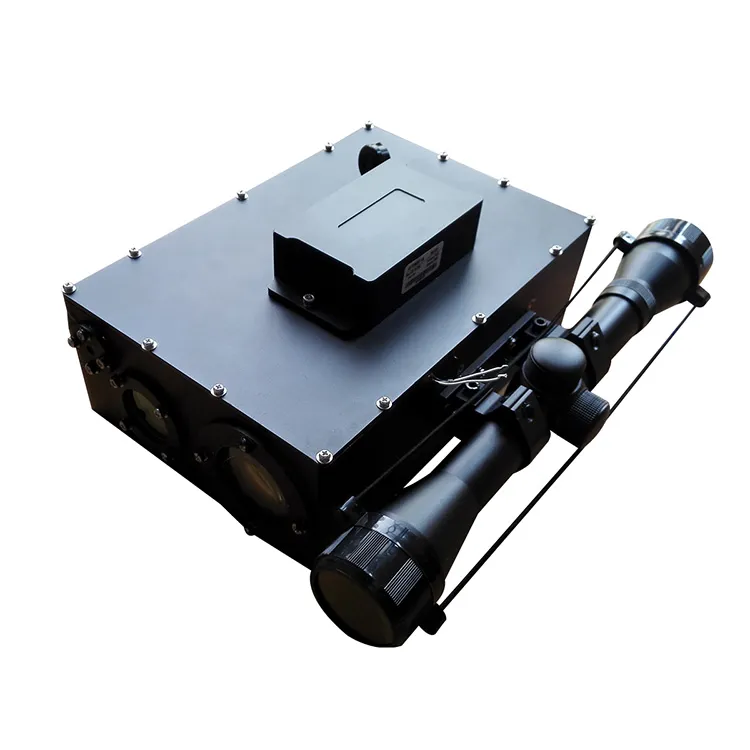
Laser ranging systems are no longer developed as isolated measurement devices. They are increasingly integrated into larger optoelectronic platforms where ranging information must work together with imaging, navigation, positioning, and control functions. This trend places greater demands on the optical source, receiving system, signal processing architecture, and overall mechanical design.
A modern rangefinder module needs to provide consistent measurement performance while remaining suitable for integration into equipment with limited space and power resources. This is particularly relevant for unmanned aerial platforms, vehicle-mounted systems, observation equipment, and other applications where weight, reliability, and environmental adaptability influence system design.
Integrated optical modules can simplify system development by combining essential ranging components within a coordinated architecture. Instead of treating the laser transmitter, receiving optics, electronics, and processing functions as independent elements, engineers can consider them as part of a complete module.
This approach is particularly useful for manufacturers developing multifunctional equipment. A well-designed ranging module can become one functional layer within a larger optical system rather than requiring a completely separate subsystem.
Wavelength selection is an important consideration when engineers develop laser ranging equipment. Different laser wavelengths have different optical characteristics, atmospheric transmission behaviors, detector requirements, and system design considerations. Selecting an appropriate wavelength therefore requires an understanding of the intended application rather than simply focusing on nominal range.
Longer-wavelength laser technologies have attracted interest in applications where eye-safety considerations, optical system architecture, and ranging requirements need to be considered together. The choice of wavelength can influence the transmitter design, receiving optics, detector configuration, signal processing strategy, and overall system integration.
For this reason, professional rangefinder development often involves a broader evaluation of the complete optical chain. Engineers need to consider the laser source, receiver sensitivity, optical alignment, electronics, environmental conditions, and intended platform before selecting an appropriate solution.
The most effective ranging solution is not necessarily the one with the highest specification in a single category. Instead, performance should be evaluated within the complete equipment architecture.
| Design Consideration | Engineering Focus | System Benefit |
|---|---|---|
| Laser Source | Stable optical output and efficient operation | Consistent ranging performance |
| Receiving System | Optical sensitivity and signal acquisition | Reliable distance information |
| Signal Processing | Accurate extraction of useful return signals | Improved measurement usability |
| Mechanical Integration | Compact and robust module construction | Flexible platform integration |
| Environmental Adaptability | Stable operation under changing conditions | Greater application flexibility |
These factors demonstrate why wavelength selection and module engineering need to be considered together. A technically suitable optical source must also work effectively with the receiving system and the platform where the module will ultimately be installed.
The expansion of unmanned and intelligent equipment is creating new demand for compact optical sensing technologies. Ranging information can support observation, navigation, positioning, terrain awareness, and other system functions depending on the overall equipment architecture.
In UAV-based optoelectronic systems, a ranging module can be integrated with visible-light cameras, infrared imaging equipment, stabilization mechanisms, and other optical components. This combination enables the platform to collect multiple types of information through a coordinated payload.
Vehicle-mounted systems also require compact and reliable ranging technologies. When optical modules are integrated into positioning or observation equipment, their mechanical stability and communication compatibility become important considerations. The module must operate as part of the wider system instead of functioning independently.
Unmanned platforms are particularly sensitive to system size, weight, power consumption, and integration complexity. These requirements encourage manufacturers to develop multifunctional optoelectronic assemblies that can perform several tasks within a relatively compact structure.
As these platforms become more sophisticated, ranging modules are expected to become increasingly integrated with digital control, optical stabilization, and intelligent processing systems.
Reliable laser ranging depends on more than the laser transmitter itself. The complete optical path must be carefully designed to ensure that emitted energy and returned signals can be processed effectively. Optical alignment, receiver performance, electronic timing, signal processing, and mechanical stability can all influence the final measurement result.
Environmental conditions also affect ranging performance. Atmospheric attenuation, background radiation, target characteristics, optical contamination, vibration, and temperature changes can create additional challenges. Therefore, application-specific engineering is essential when developing professional optical modules.
A high-quality module requires close coordination between optical and electronic components. The transmitter must operate consistently with the control system, while the receiver needs to capture useful return signals and deliver them to the processing architecture.
Signal processing is another important element. Modern ranging systems need to distinguish useful optical returns from background signals and electronic noise. Well-designed processing algorithms can improve the quality and reliability of the distance information delivered to the host system.
Mechanical design is equally important. Optical alignment must remain stable during transportation, installation, and operation. For mobile platforms, vibration and movement can introduce additional engineering challenges, making structural design and manufacturing quality essential to long-term system performance.
Using a dedicated ranging module can help equipment manufacturers simplify the development process. Instead of designing every ranging component independently, engineers can integrate a professionally developed module into an existing optical architecture.
This modular approach can reduce development complexity and allow system designers to concentrate on higher-level functions such as imaging, stabilization, navigation, communication, and platform control. It can also make it easier to adapt a product family to different equipment configurations.
Different platforms often require different optical interfaces, mechanical dimensions, communication protocols, and system configurations. Standardized products may not always satisfy these requirements. This is where OEM and ODM development becomes valuable.
Professional manufacturers can adjust module architecture according to the host platform and application environment. Custom development may involve mechanical integration, optical configuration, electronic interfaces, software communication, and other technical requirements.
Such flexibility is especially important for companies developing specialized optoelectronic systems. A supplier with both research and manufacturing capabilities can support the development process from initial technical evaluation through production and system integration.
The future development of laser ranging is closely connected with the broader evolution of intelligent optoelectronic systems. As platforms become smaller and more multifunctional, ranging technology will increasingly need to provide reliable performance without adding unnecessary system complexity.
Integration with imaging systems is expected to remain an important direction. Combining ranging information with visible and infrared images can provide more comprehensive environmental information for downstream processing. Navigation and positioning systems can also use distance information as part of a wider sensing architecture.
Another important trend is greater digital integration. Modern optical modules are increasingly designed to communicate directly with host systems, allowing measurement information to become part of an automated data-processing workflow. This supports more efficient equipment development and enables advanced platforms to make better use of optical sensing information.
The optical industry is gradually moving from component-level development toward system-oriented engineering. Laser sources, detectors, optical assemblies, electronic circuits, software, and mechanical structures are increasingly designed with their final application in mind.
This shift creates opportunities for manufacturers that can provide complete optoelectronic solutions rather than isolated components. Strong internal research capabilities, flexible production resources, and experience with system integration can help manufacturers respond more effectively to specialized technical requirements.
Shenzhen Jioptik Technology Co., Ltd. is a technology company specializing in the design, development, production, and sales of laser and fibre optic gyroscopes, inertial navigation systems, laser rangefinder modules, laser illuminators, optoelectronic pods, and related optical products.
The company has established multiple product lines covering laser and fibre optic gyroscope technologies, inertial navigation systems, optoelectronic modules, and UAV-based optoelectronic pods. Its ranging product portfolio supports different laser technologies and is developed for professional applications requiring dependable optical measurement and system integration.
Jioptik combines research and development with manufacturing capabilities and supports OEM and ODM cooperation for specialized applications. Its products are used across security, thermal imaging, unmanned aircraft, unmanned vehicles, aviation, maritime equipment, and vehicle-mounted positioning and orientation systems.
With a strong focus on optical engineering, product development, and system integration, Shenzhen Jioptik Technology Co., Ltd. provides professional solutions for companies developing advanced laser and optoelectronic equipment. As demand for compact, reliable, and application-oriented ranging technology continues to grow, Jioptik is positioned to support the next stage of innovation in integrated optical systems.
For more information on our products, please contact Jioptik.
