

Laser rangefinder modules are compact devices designed to measure distances with exceptional accuracy using laser technology. They are widely used across industrial, automotive, construction, robotics, and surveying applications due to their ability to deliver precise readings in milliseconds. With advancements in laser technology, these modules offer robust performance in various environmental conditions, making them essential components for engineers, developers, and technology integrators.
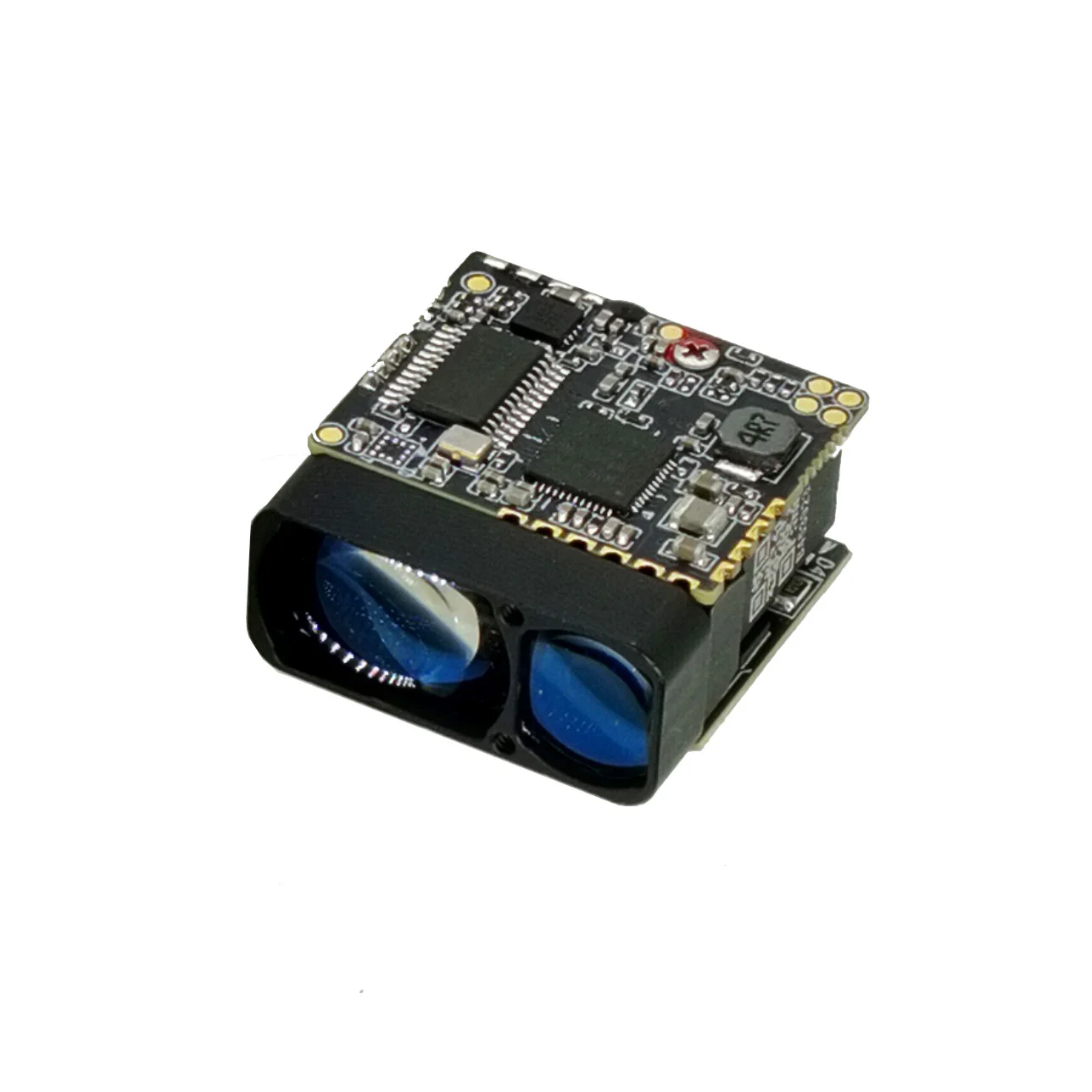
Laser rangefinder modules measure distances by emitting a laser beam toward a target and calculating the time it takes for the reflection to return. This method, known as Time-of-Flight (ToF), allows for precise distance calculations within millimeter-level accuracy. Some modules also employ phase-shift measurement for even higher precision over long distances.
| Parameter | Specification |
|---|---|
| Measurement Range | 0.03m – 200m |
| Accuracy | ±1mm – ±5mm |
| Laser Type | Class 1, 905nm or 1550nm |
| Output Interface | UART, I2C, PWM, USB |
| Operating Voltage | 3.3V – 5V |
| Response Time | 10ms – 100ms |
| Temperature Range | -20°C – 70°C |
| Dimensions | 40mm × 20mm × 10mm |
These parameters highlight the versatility and adaptability of laser rangefinder modules. A high-precision measurement capability makes them suitable for applications where traditional ultrasonic or mechanical measurement methods fail.
The module’s compact form factor enables easy integration into handheld devices, drones, autonomous vehicles, and industrial machinery. Engineers often choose modules with wide operating voltage ranges and multiple communication interfaces for seamless compatibility with microcontrollers, single-board computers, and PLC systems.
In industrial settings, laser rangefinder modules enable automated measurement and monitoring processes. For instance, in conveyor belt systems, the module can detect object positions and trigger precise sorting or packaging actions. In robotics, integrating a laser rangefinder allows for obstacle detection, path planning, and spatial mapping, providing a foundation for autonomous navigation.
Key advantages for industrial and robotics applications include:
High-Speed Measurement: Laser modules can capture thousands of readings per second, ensuring real-time monitoring and control.
Non-Contact Sensing: Measurement without physical contact reduces wear and contamination, critical for delicate or hazardous environments.
Long-Distance Capability: Certain modules can measure distances up to 200 meters with minimal error, supporting large-scale operations like warehouse management or construction site monitoring.
Compact Design: Modules occupy minimal space, enabling integration into drones, robotic arms, or handheld inspection tools without affecting mobility.
By replacing conventional measuring tools, laser rangefinder modules streamline workflows, reduce human error, and improve operational efficiency. Industries such as logistics, manufacturing, and agriculture increasingly rely on this technology for high-precision distance measurement and environmental sensing.
Q1: How do environmental factors affect the accuracy of a laser rangefinder module?
A1: Environmental conditions, including ambient light, dust, fog, or reflective surfaces, can influence measurement accuracy. Modules with higher laser power and advanced filtering algorithms can mitigate these effects, maintaining reliable readings in varied conditions.
Q2: What is the difference between time-of-flight and phase-shift measurement methods?
A2: Time-of-flight calculates distance based on the time it takes for a laser pulse to return from the target. Phase-shift measures the change in phase between emitted and reflected laser waves. Phase-shift typically provides higher accuracy at shorter ranges, while ToF is suitable for longer-distance applications.
Laser rangefinder modules are integral to the evolution of smart devices and IoT ecosystems. Autonomous vehicles, drones, and smart industrial equipment increasingly rely on accurate spatial awareness to operate efficiently.
Autonomous Vehicles: Laser rangefinder modules assist in detecting obstacles, maintaining safe distances, and enhancing driver-assistance systems. High-accuracy modules improve navigation in complex urban environments.
Smart Drones: Drones equipped with laser rangefinders perform topographic surveys, infrastructure inspections, and agricultural monitoring with minimal human intervention.
IoT Sensors: Laser modules provide precise distance measurements for smart building systems, automated storage, and real-time monitoring, enabling predictive maintenance and resource optimization.
Wearable and Handheld Devices: Compact modules are integrated into wearable devices for AR/VR applications, providing depth perception and environmental mapping.
The integration of high-performance laser rangefinder modules into IoT ecosystems enhances automation, predictive analytics, and safety across multiple sectors. Professionals adopting these modules gain a competitive edge by leveraging real-time data and high-precision measurements.
Q1: Can laser rangefinder modules operate in outdoor environments with direct sunlight?
A1: Modules with higher laser output and optimized sensor filtering are capable of outdoor operation even in direct sunlight. Choosing modules with Class 1 lasers ensures safe use while maintaining accurate distance readings.
Q2: How can developers integrate these modules into existing IoT systems?
A2: Most modules provide standard communication interfaces such as UART, I2C, and PWM, enabling straightforward integration with microcontrollers and single-board computers. Firmware libraries and SDKs from manufacturers simplify configuration, calibration, and data acquisition for seamless IoT deployment.
Selecting the right laser rangefinder module requires consideration of accuracy, range, interface compatibility, environmental tolerance, and cost-effectiveness. Professionals should prioritize modules that balance performance with reliability to achieve consistent results.
Selection Guidelines:
Measurement Accuracy: Prioritize modules with low error margins for applications requiring millimeter-level precision.
Range Requirements: Match the module’s measurement range to the intended application; long-range modules are necessary for surveying and outdoor projects.
Environmental Resistance: Modules with temperature and humidity tolerance ensure stable performance under harsh conditions.
Communication Interfaces: Ensure compatibility with existing systems (UART, I2C, PWM, USB) for smooth integration.
Response Time: Fast response modules are essential for real-time monitoring and robotics applications.
By carefully evaluating these criteria, businesses and engineers can ensure the deployment of reliable laser rangefinder modules that enhance operational efficiency and precision measurement capabilities.
JioptiK offers a wide range of high-performance laser rangefinder modules designed for precision applications across industrial, robotics, and IoT sectors. Their modules combine compact design, robust accuracy, and versatile integration options, supporting advanced automation and measurement systems. For further inquiries or to explore JioptiK’s complete product lineup, contact us to receive expert guidance and tailored solutions.
For more information on our products, please contact Jioptik.
